Recovery Notes
This case study reflects the response of one horse and is provided for educational purposes only. Cryotherapy is not a substitute for veterinary diagnosis, treatment, or medical advice.
Case Study: Slippers
Cryotherapy Support for a DDFT
and Navicular Flare-Up
Cryotherapy Support for a DDFT
and Navicular Flare-Up
01
Background
Slippers has a history of a Deep Digital Flexor Tendon (DDFT) injury and Navicular Syndrome. She had remained comfortable without a significant flare-up for an extended period.

02
Initial Presentation
Earlier in the week, Slippers experienced a brief episode of lameness that resolved within 24 hours. On Saturday morning, mild swelling was observed in the affected leg. Given her history of DDFT and Navicular Syndrome, a recovery support protocol was initiated while her condition continued to be monitored.
03
Recovery Support
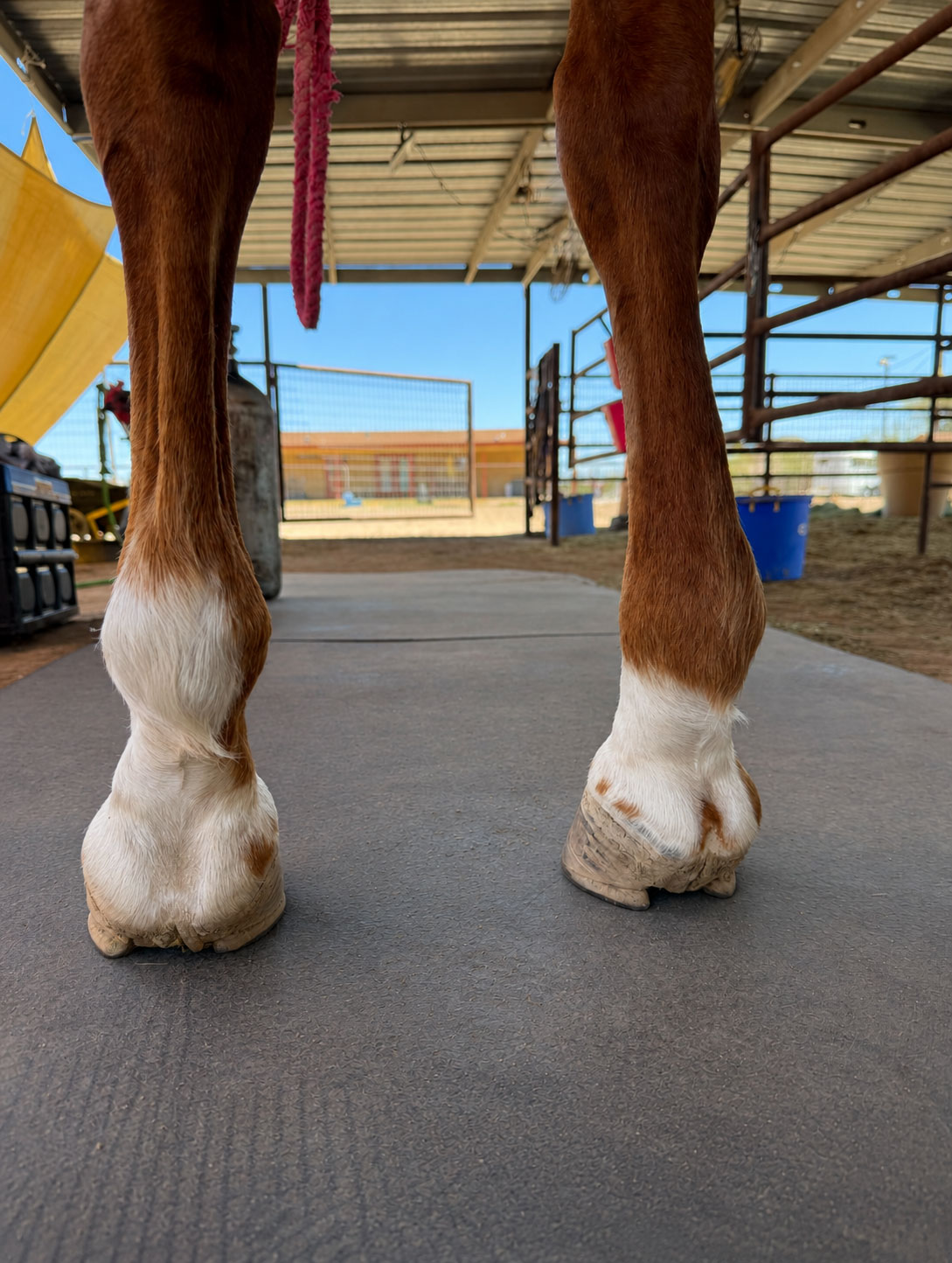
Cryotherapy was applied Saturday morning to the affected limb. Later that day, a cooling poultice was used to help manage tissue temperature, followed by a second cryotherapy session. A standing wrap was applied overnight for approximately 12 hours. The following day, a third cryotherapy session was performed.

04
Treatment Areas
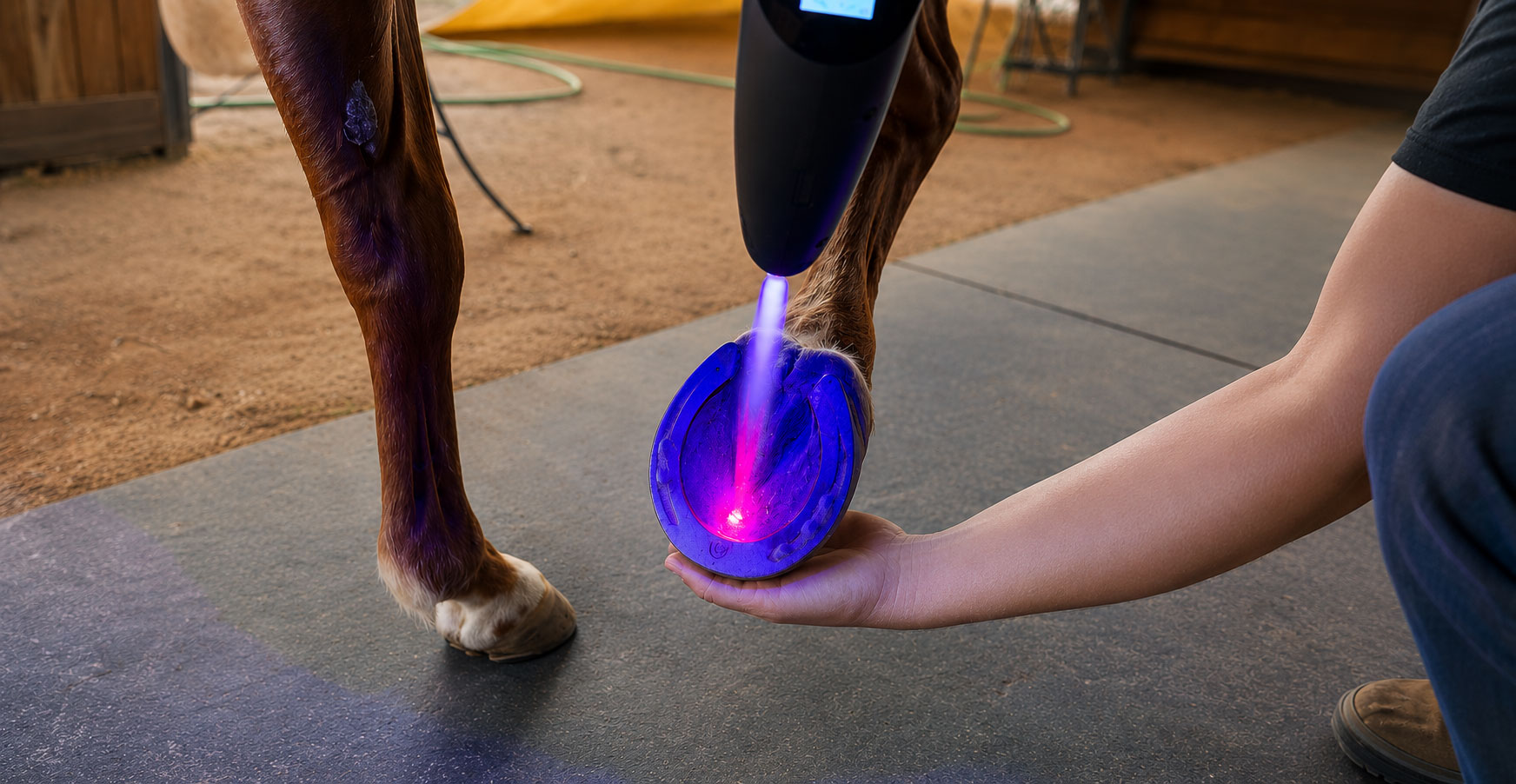
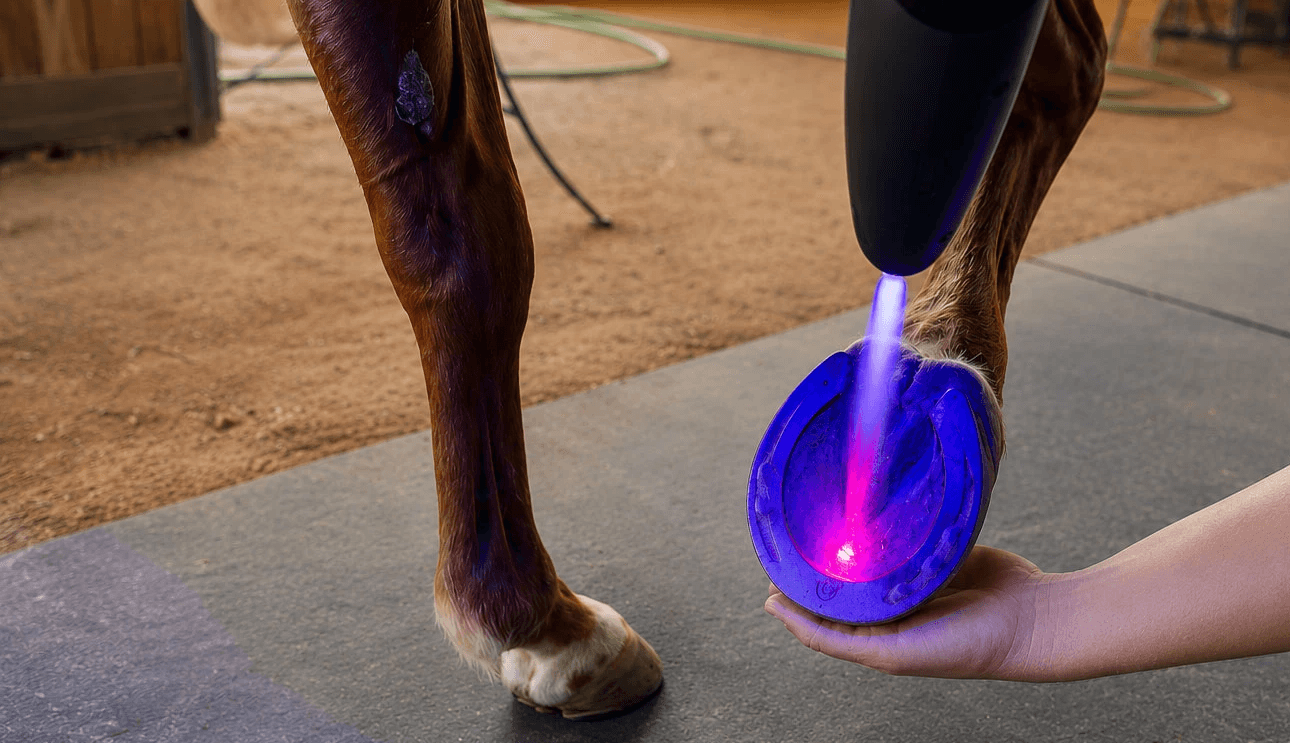
Cryotherapy was applied from the back of the knee through the cannon bone. The hoof was also included in the treatment protocol due to Slippers' history of Navicular Syndrome in the same limb.
05
Observations
Following the overnight standing wrap, swelling appeared significantly reduced and had not progressed. Visual assessment suggested an approximate reduction of 75-80% compared to the initial presentation. By Tuesday morning, visible swelling was no longer present.

06
Outcome
Three cryotherapy sessions, combined with cooling support and temporary compression, coincided with a progressive reduction in swelling during the observation period. Although her condition has improved, ongoing monitoring will help determine whether any additional veterinary follow-up is necessary.

01
Background
Slippers has a history of a Deep Digital Flexor Tendon (DDFT) injury and Navicular Syndrome. She had remained comfortable without a significant flare-up for an extended period.
02
Initial Presentation
Earlier in the week, Slippers experienced a brief episode of lameness that resolved within 24 hours. On Saturday morning, mild swelling was observed in the affected leg. Given her history of DDFT and Navicular Syndrome, a recovery support protocol was initiated while her condition continued to be monitored.
03
Recovery Support
Cryotherapy was applied Saturday morning to the affected limb. Later that day, a cooling poultice was used to help manage tissue temperature, followed by a second cryotherapy session. A standing wrap was applied overnight for approximately 12 hours. The following day, a third cryotherapy session was performed.
04
Treatment Areas
Cryotherapy was applied from the back of the knee through the cannon bone. The hoof was also included in the treatment protocol due to Slippers' history of Navicular Syndrome in the same limb.
05
Observations
Following the overnight standing wrap, swelling appeared significantly reduced and had not progressed. Visual assessment suggested an approximate reduction of 75-80% compared to the initial presentation. By Tuesday morning, visible swelling was no longer present.
06
Outcome
Three cryotherapy sessions, combined with cooling support and temporary compression, coincided with a progressive reduction in swelling during the observation period. Although her condition has improved, ongoing monitoring will help determine whether any additional veterinary follow-up is necessary.
01
Background
Slippers has a history of a Deep Digital Flexor Tendon (DDFT) injury and Navicular Syndrome. She had remained comfortable without a significant flare-up for an extended period.
02
Initial Presentation
Earlier in the week, Slippers experienced a brief episode of lameness that resolved within 24 hours. On Saturday morning, mild swelling was observed in the affected leg. Given her history of DDFT and Navicular Syndrome, a recovery support protocol was initiated while her condition continued to be monitored.
03
Recovery Support
Cryotherapy was applied Saturday morning to the affected limb. Later that day, a cooling poultice was used to help manage tissue temperature, followed by a second cryotherapy session. A standing wrap was applied overnight for approximately 12 hours. The following day, a third cryotherapy session was performed.
04
Treatment Areas
Cryotherapy was applied from the back of the knee through the cannon bone. The hoof was also included in the treatment protocol due to Slippers' history of Navicular Syndrome in the same limb.
05
Observations
Following the overnight standing wrap, swelling appeared significantly reduced and had not progressed. Visual assessment suggested an approximate reduction of 75-80% compared to the initial presentation. By Tuesday morning, visible swelling was no longer present.
06
Outcome
Three cryotherapy sessions, combined with cooling support and temporary compression, coincided with a progressive reduction in swelling during the observation period. Although her condition has improved, ongoing monitoring will help determine whether any additional veterinary follow-up is necessary.
01
Background
Slippers has a history of a Deep Digital Flexor Tendon (DDFT) injury and Navicular Syndrome. She had remained comfortable without a significant flare-up for an extended period.
02
Initial Presentation
Earlier in the week, Slippers experienced a brief episode of lameness that resolved within 24 hours. On Saturday morning, mild swelling was observed in the affected leg. Given her history of DDFT and Navicular Syndrome, a recovery support protocol was initiated while her condition continued to be monitored.
03
Recovery Support
Cryotherapy was applied Saturday morning to the affected limb. Later that day, a cooling poultice was used to help manage tissue temperature, followed by a second cryotherapy session. A standing wrap was applied overnight for approximately 12 hours. The following day, a third cryotherapy session was performed.
04
Treatment Areas
Cryotherapy was applied from the back of the knee through the cannon bone. The hoof was also included in the treatment protocol due to Slippers' history of Navicular Syndrome in the same limb.
05
Observations
Following the overnight standing wrap, swelling appeared significantly reduced and had not progressed. Visual assessment suggested an approximate reduction of 75-80% compared to the initial presentation. By Tuesday morning, visible swelling was no longer present.
06
Outcome
Three cryotherapy sessions, combined with cooling support and temporary compression, coincided with a progressive reduction in swelling during the observation period. Although her condition has improved, ongoing monitoring will help determine whether any additional veterinary follow-up is necessary.
01
Background
Slippers has a history of a Deep Digital Flexor Tendon (DDFT) injury and Navicular Syndrome. She had remained comfortable without a significant flare-up for an extended period.
02
Initial Presentation
Earlier in the week, Slippers experienced a brief episode of lameness that resolved within 24 hours. On Saturday morning, mild swelling was observed in the affected leg. Given her history of DDFT and Navicular Syndrome, a recovery support protocol was initiated while her condition continued to be monitored.
03
Recovery Support
Cryotherapy was applied Saturday morning to the affected limb. Later that day, a cooling poultice was used to help manage tissue temperature, followed by a second cryotherapy session. A standing wrap was applied overnight for approximately 12 hours. The following day, a third cryotherapy session was performed.
04
Treatment Areas
Cryotherapy was applied from the back of the knee through the cannon bone. The hoof was also included in the treatment protocol due to Slippers' history of Navicular Syndrome in the same limb.
05
Observations
Following the overnight standing wrap, swelling appeared significantly reduced and had not progressed. Visual assessment suggested an approximate reduction of 75-80% compared to the initial presentation. By Tuesday morning, visible swelling was no longer present.
06
Outcome
Three cryotherapy sessions, combined with cooling support and temporary compression, coincided with a progressive reduction in swelling during the observation period. This case study reflects the response of one horse and is provided for educational purposes only. Cryotherapy is not a substitute for veterinary diagnosis, treatment, or medical advice.
01
Background
Slippers has a history of a Deep Digital Flexor Tendon (DDFT) injury and Navicular Syndrome. She had remained comfortable without a significant flare-up for an extended period.
02
Initial Presentation
Earlier in the week, Slippers experienced a brief episode of lameness that resolved within 24 hours. On Saturday morning, mild swelling was observed in the affected leg. Given her history of DDFT and Navicular Syndrome, a recovery support protocol was initiated while her condition continued to be monitored.
03
Recovery Support
Cryotherapy was applied Saturday morning to the affected limb. Later that day, a cooling poultice was used to help manage tissue temperature, followed by a second cryotherapy session. A standing wrap was applied overnight for approximately 12 hours. The following day, a third cryotherapy session was performed.
04
Treatment Areas
Cryotherapy was applied from the back of the knee through the cannon bone. The hoof was also included in the treatment protocol due to Slippers' history of Navicular Syndrome in the same limb.
05
Observations
Following the overnight standing wrap, swelling appeared significantly reduced and had not progressed. Visual assessment suggested an approximate reduction of 75-80% compared to the initial presentation. By Tuesday morning, visible swelling was no longer present.
06
Outcome
Three cryotherapy sessions, combined with cooling support and temporary compression, coincided with a progressive reduction in swelling during the observation period. This case study reflects the response of one horse and is provided for educational purposes only. Cryotherapy is not a substitute for veterinary diagnosis, treatment, or medical advice.
01
Background
Slippers has a history of a Deep Digital Flexor Tendon (DDFT) injury and Navicular Syndrome. She had remained comfortable without a significant flare-up for an extended period.
02
Initial Presentation
Earlier in the week, Slippers experienced a brief episode of lameness that resolved within 24 hours. On Saturday morning, mild swelling was observed in the affected leg. Given her history of DDFT and Navicular Syndrome, a recovery support protocol was initiated while her condition continued to be monitored.
03
Recovery Support
Cryotherapy was applied Saturday morning to the affected limb. Later that day, a cooling poultice was used to help manage tissue temperature, followed by a second cryotherapy session. A standing wrap was applied overnight for approximately 12 hours. The following day, a third cryotherapy session was performed.
04
Treatment Areas
Cryotherapy was applied from the back of the knee through the cannon bone. The hoof was also included in the treatment protocol due to Slippers' history of Navicular Syndrome in the same limb.
05
Observations
Following the overnight standing wrap, swelling appeared significantly reduced and had not progressed. Visual assessment suggested an approximate reduction of 75-80% compared to the initial presentation. By Tuesday morning, visible swelling was no longer present.
06
Outcome
Three cryotherapy sessions, combined with cooling support and temporary compression, coincided with a progressive reduction in swelling during the observation period. This case study reflects the response of one horse and is provided for educational purposes only. Cryotherapy is not a substitute for veterinary diagnosis, treatment, or medical advice.
01
Background
Slippers has a history of a Deep Digital Flexor Tendon (DDFT) injury and Navicular Syndrome. She had remained comfortable without a significant flare-up for an extended period.
02
Initial Presentation
Earlier in the week, Slippers experienced a brief episode of lameness that resolved within 24 hours. On Saturday morning, mild swelling was observed in the affected leg. Given her history of DDFT and Navicular Syndrome, a recovery support protocol was initiated while her condition continued to be monitored.
03
Recovery Support
Cryotherapy was applied Saturday morning to the affected limb. Later that day, a cooling poultice was used to help manage tissue temperature, followed by a second cryotherapy session. A standing wrap was applied overnight for approximately 12 hours. The following day, a third cryotherapy session was performed.
04
Treatment Areas
Cryotherapy was applied from the back of the knee through the cannon bone. The hoof was also included in the treatment protocol due to Slippers' history of Navicular Syndrome in the same limb.
05
Observations
Following the overnight standing wrap, swelling appeared significantly reduced and had not progressed. Visual assessment suggested an approximate reduction of 75-80% compared to the initial presentation. By Tuesday morning, visible swelling was no longer present.
06
Outcome
Three cryotherapy sessions, combined with cooling support and temporary compression, coincided with a progressive reduction in swelling during the observation period. This case study reflects the response of one horse and is provided for educational purposes only. Cryotherapy is not a substitute for veterinary diagnosis, treatment, or medical advice.
01
Background
Slippers has a history of a Deep Digital Flexor Tendon (DDFT) injury and Navicular Syndrome. She had remained comfortable without a significant flare-up for an extended period.
02
Initial Presentation
Earlier in the week, Slippers experienced a brief episode of lameness that resolved within 24 hours. On Saturday morning, mild swelling was observed in the affected leg. Given her history of DDFT and Navicular Syndrome, a recovery support protocol was initiated while her condition continued to be monitored.
03
Recovery Support
Cryotherapy was applied Saturday morning to the affected limb. Later that day, a cooling poultice was used to help manage tissue temperature, followed by a second cryotherapy session. A standing wrap was applied overnight for approximately 12 hours. The following day, a third cryotherapy session was performed.
04
Treatment Areas
Cryotherapy was applied from the back of the knee through the cannon bone. The hoof was also included in the treatment protocol due to Slippers' history of Navicular Syndrome in the same limb.
05
Observations
Following the overnight standing wrap, swelling appeared significantly reduced and had not progressed. Visual assessment suggested an approximate reduction of 75-80% compared to the initial presentation. By Tuesday morning, visible swelling was no longer present.
06
Outcome
Three cryotherapy sessions, combined with cooling support and temporary compression, coincided with a progressive reduction in swelling during the observation period. Although her condition has improved, ongoing monitoring will help determine whether any additional veterinary follow-up is necessary.
01
Background
Slippers has a history of a Deep Digital Flexor Tendon (DDFT) injury and Navicular Syndrome. She had remained comfortable without a significant flare-up for an extended period.
02
Initial Presentation
Earlier in the week, Slippers experienced a brief episode of lameness that resolved within 24 hours. On Saturday morning, mild swelling was observed in the affected leg. Given her history of DDFT and Navicular Syndrome, a recovery support protocol was initiated while her condition continued to be monitored.
03
Recovery Support
Cryotherapy was applied Saturday morning to the affected limb. Later that day, a cooling poultice was used to help manage tissue temperature, followed by a second cryotherapy session. A standing wrap was applied overnight for approximately 12 hours. The following day, a third cryotherapy session was performed.
04
Treatment Areas
Cryotherapy was applied from the back of the knee through the cannon bone. The hoof was also included in the treatment protocol due to Slippers' history of Navicular Syndrome in the same limb.
05
Observations
Following the overnight standing wrap, swelling appeared significantly reduced and had not progressed. Visual assessment suggested an approximate reduction of 75-80% compared to the initial presentation. By Tuesday morning, visible swelling was no longer present.
06
Outcome
Three cryotherapy sessions, combined with cooling support and temporary compression, coincided with a progressive reduction in swelling during the observation period. Although her condition has improved, ongoing monitoring will help determine whether any additional veterinary follow-up is necessary.
01
Background
Slippers has a history of a Deep Digital Flexor Tendon (DDFT) injury and Navicular Syndrome. She had remained comfortable without a significant flare-up for an extended period.
02
Initial Presentation
Earlier in the week, Slippers experienced a brief episode of lameness that resolved within 24 hours. On Saturday morning, mild swelling was observed in the affected leg. Given her history of DDFT and Navicular Syndrome, a recovery support protocol was initiated while her condition continued to be monitored.
03
Recovery Support
Cryotherapy was applied Saturday morning to the affected limb. Later that day, a cooling poultice was used to help manage tissue temperature, followed by a second cryotherapy session. A standing wrap was applied overnight for approximately 12 hours. The following day, a third cryotherapy session was performed.
04
Treatment Areas
Cryotherapy was applied from the back of the knee through the cannon bone. The hoof was also included in the treatment protocol due to Slippers' history of Navicular Syndrome in the same limb.
05
Observations
Following the overnight standing wrap, swelling appeared significantly reduced and had not progressed. Visual assessment suggested an approximate reduction of 75-80% compared to the initial presentation. By Tuesday morning, visible swelling was no longer present.
06
Outcome
Three cryotherapy sessions, combined with cooling support and temporary compression, coincided with a progressive reduction in swelling during the observation period. Although her condition has improved, ongoing monitoring will help determine whether any additional veterinary follow-up is necessary.
01
Background
Slippers has a history of a Deep Digital Flexor Tendon (DDFT) injury and Navicular Syndrome. She had remained comfortable without a significant flare-up for an extended period.
02
Initial Presentation
Earlier in the week, Slippers experienced a brief episode of lameness that resolved within 24 hours. On Saturday morning, mild swelling was observed in the affected leg. Given her history of DDFT and Navicular Syndrome, a recovery support protocol was initiated while her condition continued to be monitored.
03
Recovery Support
Cryotherapy was applied Saturday morning to the affected limb. Later that day, a cooling poultice was used to help manage tissue temperature, followed by a second cryotherapy session. A standing wrap was applied overnight for approximately 12 hours. The following day, a third cryotherapy session was performed.
04
Treatment Areas
Cryotherapy was applied from the back of the knee through the cannon bone. The hoof was also included in the treatment protocol due to Slippers' history of Navicular Syndrome in the same limb.
05
Observations
Following the overnight standing wrap, swelling appeared significantly reduced and had not progressed. Visual assessment suggested an approximate reduction of 75-80% compared to the initial presentation. By Tuesday morning, visible swelling was no longer present.
06
Outcome
Three cryotherapy sessions, combined with cooling support and temporary compression, coincided with a progressive reduction in swelling during the observation period. Although her condition has improved, ongoing monitoring will help determine whether any additional veterinary follow-up is necessary.